

Every spring, after the long Karakoram winter, the Hunza Valley changes colour. Orchards of cherry and apricot trees burst into pink and white blossom, and the terraced fields around Karimabad stand out against the snow-capped peaks. It is one of the most photogenic times of the year in northern Pakistan, and still a quiet season compared with the summer.
This guide explains when the cherry blossoms bloom in Hunza, where to see them, what the weather is like, what to pack and how to plan a spring trip.
Hunza in spring at a glance
- Blossom season: late March to early April, peak usually in the first week of April
- Bloom length: about 2–3 weeks
- Daytime temperatures: about 10–20 °C, cooler at night
- Where: Karimabad, Baltit and Altit forts, Eagle’s Nest, Passu
- Getting there: fly Islamabad–Gilgit and drive 2–3 hours, or take the Karakoram Highway by road
- Our tour: Hunza Cherry Blossom Tour, 10 days from Islamabad
When do the cherry blossoms bloom in Hunza?
On our tours, the cherry blossoms in Hunza usually bloom from late March to early April. The bloom lasts about 2–3 weeks, and the peak is normally in the first week of April. The exact timing changes every year with the weather, so it is best to plan your trip for early spring and keep a little flexibility.
For a cherry blossom trip, we recommend travelling between late March and mid-April.
Cherry and apricot blossom
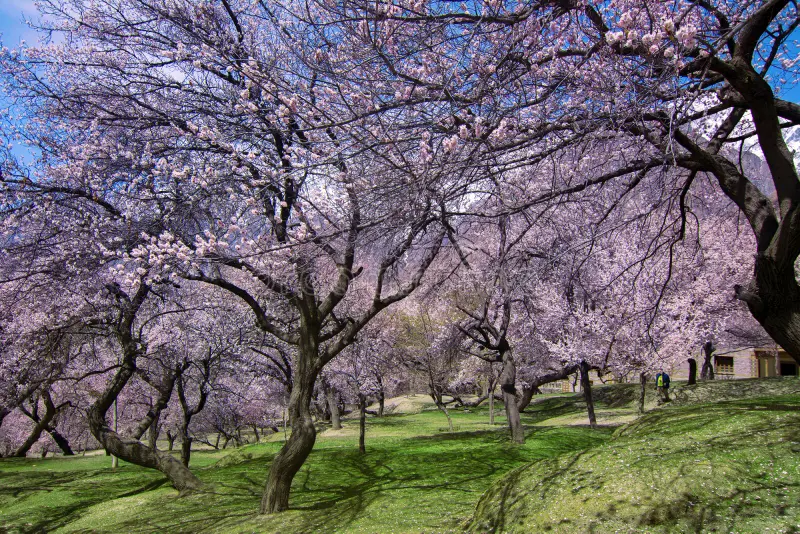
Spring in Hunza is not only about cherry trees. Apricot trees bloom at the same time of year, and in many villages the two blend together into clouds of white and pink. Around Passu, spring brings blooming apricot trees and melting snow, with a mix of snowy peaks and greening valleys.
Spring weather in Hunza
Spring weather in Hunza is generally mild and pleasant. Daytime temperatures usually range from 10 °C to 20 °C, which is comfortable for sightseeing, photography and short hikes. Nights are cooler, so bring a light jacket or sweater. Rain is rare in this season, although an occasional drizzle can happen. On the road, keep in mind that some mountain routes may still see occasional rain or snow in spring.
Where to see the cherry blossoms in Hunza
Karimabad
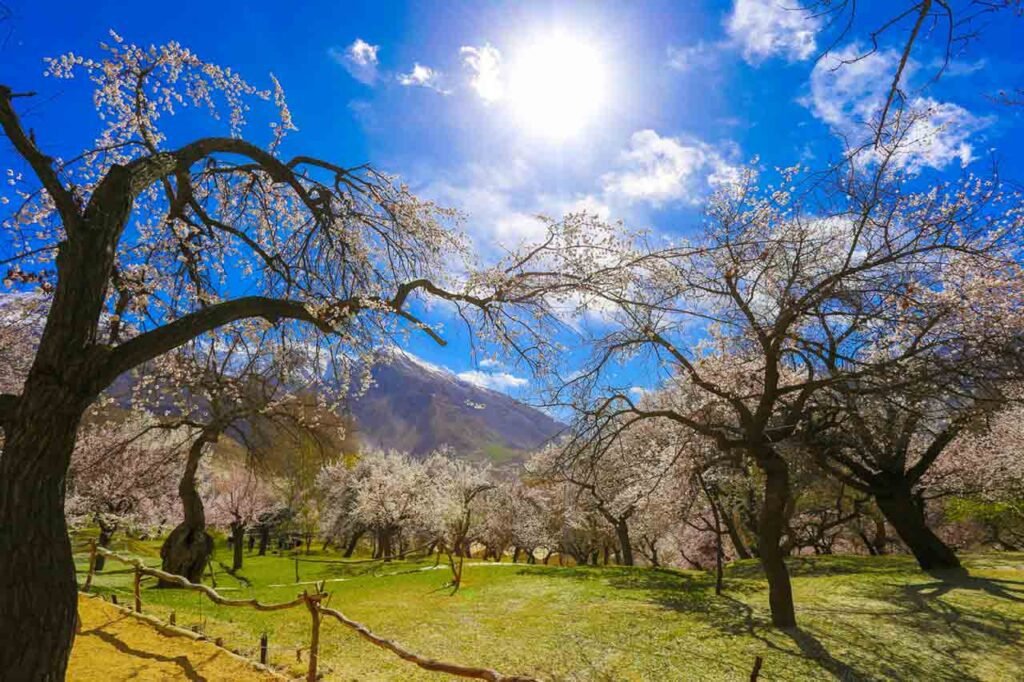
The main town of Hunza is covered with blossom in spring, with views over the valley to the surrounding mountains. A walk along the old water channels between the orchards is one of the most relaxing ways to enjoy it.
Baltit Fort and Altit Fort
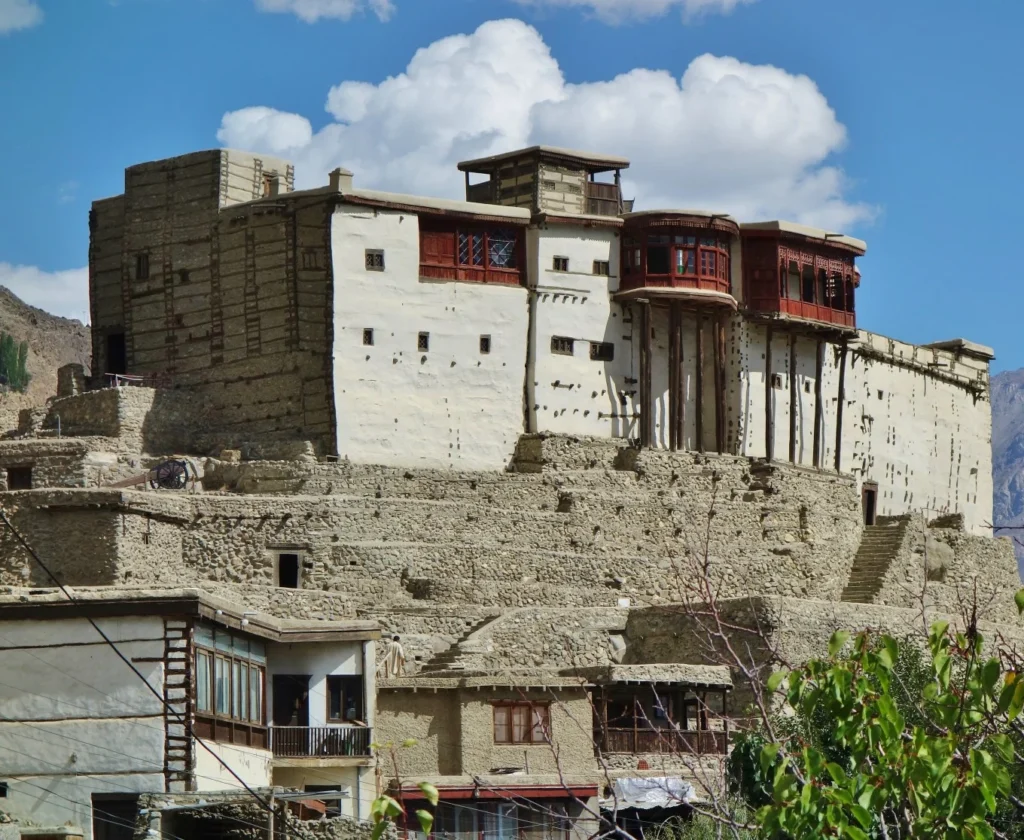
The two historic forts above Karimabad are surrounded by blossoming trees in spring. Baltit Fort looks down over the town, while Altit Fort and the old Altit village sit among orchards and terraced fields.
Eagle’s Nest and Duikur
The viewpoint at Duikur, known as Eagle’s Nest, gives a wide view over the valley and its blossoming trees, and is famous for sunsets over the peaks.
Passu and Upper Hunza
Further up the valley, around Passu, the blossom season comes with views of the Passu Cones and the Passu Glacier.
Things to do in Hunza in spring
- Photography: blossom, valleys and snow-capped mountains in one frame.
- Sightseeing: Baltit and Altit forts, the bazaar of Karimabad and the local villages.
- Easy walks: water-channel trails in Karimabad, the hike up to Hopper Glacier and the walk to the Passu Glacier viewpoint from upper Borith.
- Attabad Lake: a boat ride on the turquoise lake.
- Culture: local handicraft shops and the hospitality of the Hunza people.
- Khunjerab Pass: a day trip to the Pakistan–China border at 4,733 m, with a chance to spot Himalayan ibex and Marco Polo sheep.
Spring festival
In spring, Hunza celebrates the new season with a blossom festival of traditional music, dance and local food.
Photography tips for the blossom season
- Go early or late: the soft light of early morning and late afternoon brings out the colours of the blossom and the snow on the peaks.
- Include the mountains: the blossom is most striking with the snow-capped peaks or the forts behind it, so look for viewpoints above the orchards.
- Plan a sunset: Duikur, at Eagle’s Nest, is the classic sunset spot over the valley.
- Respect the orchards: many orchards are private gardens around family homes. Stay on paths and ask before entering or photographing people.
- Bring spare batteries: cooler mornings drain batteries faster, and electricity can be unreliable.
Local food to try
Hunza is known for its traditional food. Look out for Hunza dry apricots, chapshuro (a pastry filled with meat or vegetables) and Hunza bread, a dense traditional bread often served with apricot oil or jam.
What to pack for a spring trip
- Light, layered clothing: mild days, chilly evenings.
- Comfortable walking shoes: for sightseeing and short hikes.
- Camera: spring light and blossom are made for photography.
- Sunscreen and sunglasses: the sun is strong at altitude, even in spring.
- Power bank: electricity can sometimes be unreliable.
How to get to Hunza in spring
There are two ways to reach Hunza from Islamabad:
- By air and road: fly from Islamabad to Gilgit, then drive about 2–3 hours to Hunza. Flights depend on the weather.
- By road: the Karakoram Highway from Islamabad is a long but scenic journey of around 12–14 hours, usually split over two days.
Our Hunza Cherry Blossom Tour travels by road both ways, with a night in Chilas on the way up and in Besham on the way back. The road passes the point where three mountain ranges meet, and stops at the Rakaposhi viewpoint.
Our Hunza Cherry Blossom Tour
If you would like to see the blossom with a local team, our 10-day Hunza Cherry Blossom Tour is planned around the season:
- Days 1–3: Islamabad – Chilas – Karimabad, along the Karakoram Highway
- Day 4: Baltit Fort, Altit Fort, the water channels and sunset at Duikur
- Day 5: Hopper Valley and Hopper Glacier, Attabad Lake, then Passu
- Day 6: Passu suspension bridge and the Passu Glacier viewpoint from upper Borith
- Day 7: day trip to Khunjerab Pass (4,733 m)
- Days 8–10: Gilgit – Besham – Islamabad, with Taxila Museum and Islamabad sightseeing
The tour suits anyone with normal fitness who enjoys photography, culture and spring landscapes. Walking is limited to short hikes. Groups are up to 24 people and all nights are in hotels.
Is Hunza a good spring destination for families?
Yes. The mild weather, the views and the variety of easy activities make Hunza in spring a good choice for families. Children can enjoy the outdoors, while adults explore the forts and villages. Keep in mind that some days on the road are long.
Hunza cherry blossom FAQ
When is cherry blossom season in Hunza?
Usually from late March to early April, with the peak in the first week of April. The bloom lasts about 2–3 weeks.
How long should I stay in Hunza for the blossom?
Four to six days in Hunza is enough to see the blossom, the forts and the viewpoints. Our tour takes 10 days in total, including the journey from Islamabad and a day trip to Khunjerab Pass.
What is the weather like?
Mild and pleasant, usually 10–20 °C during the day and cooler at night.
Do I need to be fit?
No special fitness is needed. Walking is limited to short hikes, but there are some long days on the road.
Can I visit Khunjerab Pass in spring?
Yes, when the pass is open for the season. Our cherry blossom tour includes a day trip to Khunjerab Pass from Passu.
Plan your spring trip with Explore Pakistan
Spring is a short season, so it pays to plan early. See the full day-by-day programme on our Hunza Cherry Blossom Tour page and send us an enquiry. Our team in Hunza will help you choose the right dates.